What Dorado Luxury Homeownership Costs Really Include
June 11, 2026
June 11, 2026
Buying in Dorado is exciting, but the purchase price is only part of the picture. In this market, ongoing ownership costs can look very different from what you may be used to on the mainland or even in other parts of Puerto Rico. If you want to budget with confidence, it helps to understand where those recurring expenses come from and which line items deserve the closest review. Let’s dive in.
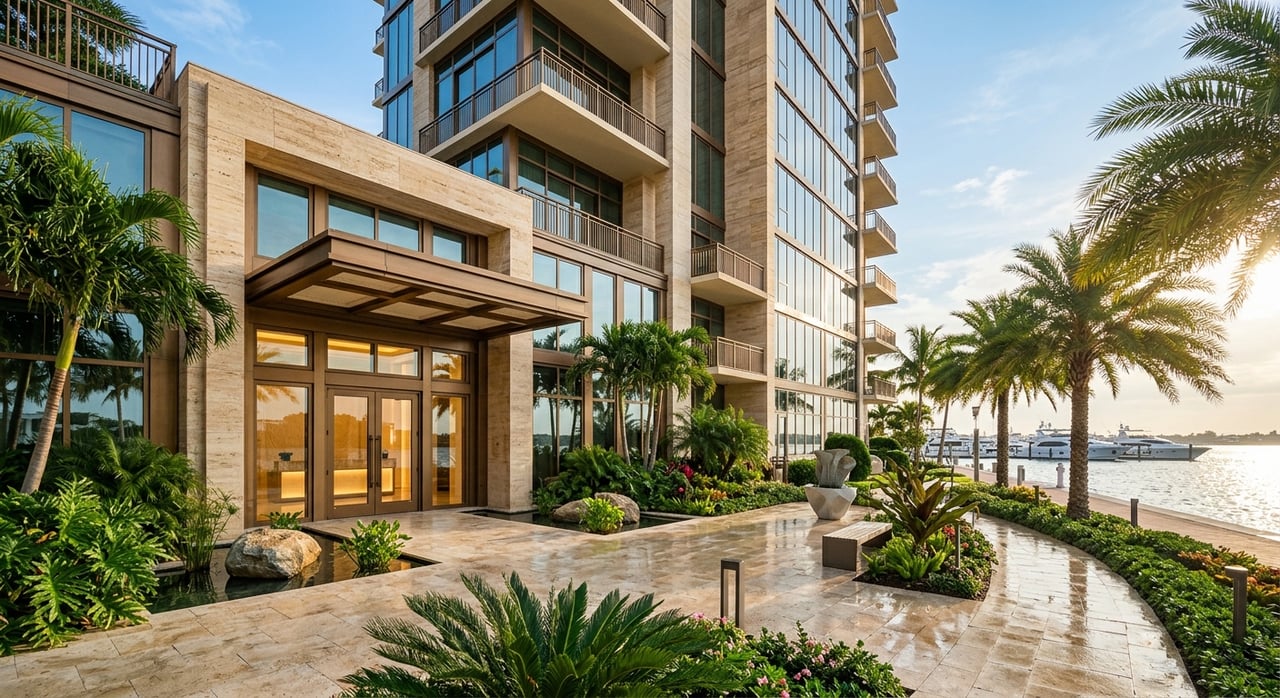
Dorado includes resort-oriented coastal communities where ownership often comes with access to a long list of amenities and services. Official community and resort materials describe features such as beach access, golf, dining, fitness, water sports, trails, spa services, club programming, pools, tennis courts, and parks.
That level of amenity density usually means higher fixed costs than you might see in a more typical suburban setting. If you are comparing Dorado with another Puerto Rico market, it is important to look beyond square footage and location alone. The operating structure of the community can make a major difference in your monthly and annual budget.
One of the biggest recurring costs in Dorado can be your monthly maintenance or common charges. Recent public listing snapshots show a very wide range, from about $395 per month in lower-density neighborhoods to $7,197 per month at West Beach 3811.
In Dorado Beach East, homes have appeared with common charges around $850, $950, $1,095, $1,200, and $2,190 per month. Other examples include about $1,200 in Dorado Reef and $1,600 in The Greens. These figures are asking-side snapshots, not a marketwide average, but they clearly show how much fees can rise when a community includes more amenities and service layers.
A monthly HOA number does not always tell the whole story. In a resort-driven market, you should confirm whether the quoted amount includes everything tied to ownership.
Ask for clarity on items such as:
For a luxury buyer, this step matters because two homes with similar pricing can carry very different ongoing obligations.
In Puerto Rico, real property tax is administered through CRIM, not through the same kind of county system many mainland buyers expect. Official Hacienda materials state that real property tax is collected by CRIM and that combined real-property rates generally range from 8% to 10% on assessed value.
The key detail is that assessed value is not the same thing as current market value. If you are coming from a mainland market, do not assume the tax bill will be calculated in the same way as a recent purchase-price-based system.
CRIM valuations are set as of January 1. Bills are payable on January 1 and July 1, with a 90-day grace period.
That makes it especially important to review the current CRIM bill during due diligence. It gives you a more reliable picture of the property’s recurring tax profile than an estimate based on mainland assumptions.
Electricity is another line item that deserves close attention in Dorado. According to the U.S. Energy Information Administration, Puerto Rico’s average residential electricity price was 24.37 cents per kWh in March 2026, with a 2026 year-to-date residential average of 24.25 cents per kWh.
For larger homes, oceanfront residences, and properties with extensive cooling needs, that can add up quickly. If the home includes features such as multiple air-conditioned zones, large interior volume, or heavy daily use, your real monthly cost may feel very different from what you are used to elsewhere.
Averages help set expectations, but the property’s own usage pattern matters more. A part-time residence may perform very differently from a full-time family home or a property with more intensive climate control.
That is why utility history is one of the most useful documents to request during due diligence. It gives you a more grounded view of what ownership may look like month to month.
Water and sewer costs in Puerto Rico are also worth reviewing carefully, especially in larger homes. AAA’s residential rate sheet, effective July 1, 2025, shows combined water and sewer base charges that rise sharply depending on meter size.
Current combined base charges are listed as:
Usage charges are added on top of that, with combined blocks of $5.67, $6.23, and $8.40 per cubic meter. For larger estates, meter size alone can create a notable fixed utility expense before any water is used.
In a luxury coastal market, larger lots and larger homes may come with irrigation, outdoor living areas, or other features that support a bigger service setup. At the top end, a 4-inch meter carries a base charge of about $7,503 per year before usage.
That does not mean every Dorado property will face that cost. It does mean you should verify the actual meter size and recent bills rather than treating water as a minor afterthought.
Insurance is another area where general assumptions can be costly. Puerto Rico’s official insurance office advises homeowners to review property coverage annually, understand replacement cost, and remember that flood insurance is separate from a standard property policy.
The same guidance also notes that higher deductibles can lower premiums, but the deductible still needs to be affordable if you ever need to use the policy. In a coastal market like Dorado, these details deserve very careful review.
NOAA states that Atlantic hurricane season runs from June 1 through November 30. FEMA flood-map tools are the official source for flood-hazard information.
For practical budgeting, that means you should verify wind coverage, flood requirements, and deductible structure at the exact property level. Even within the same general area, insurance costs and coverage needs can vary from parcel to parcel.
Luxury ownership often includes recurring service costs beyond taxes, utilities, and insurance. Based on the property type and climate in Dorado’s beach-oriented communities, many owners budget for help with routine upkeep and storm readiness.
Common examples may include:
These costs are not universal, and not every owner will use every service. Still, for many high-end homes in Dorado, they are part of the real operating picture and should be treated as recurring ownership costs, not occasional extras.
The cleanest approach is to split your budget into fixed costs and variable costs. That gives you a more realistic picture of your baseline carrying cost before you even account for lifestyle choices or seasonal use.
Your fixed costs may include:
Your variable costs may include:
When you look at a property this way, it becomes much easier to compare one Dorado home to another.
If you want the clearest picture of ongoing costs, focus on current, property-specific records. In Dorado, the most useful due diligence items often include:
For off-island buyers, it can also help to organize a contact list for utilities, vendors, and storm preparation early in the process. Ownership runs more smoothly when these systems are in place before closing rather than after.
A home in Dorado can deliver an exceptional lifestyle, but the smartest purchases are made with a full understanding of the recurring costs that come with that experience. The difference between a comfortable ownership plan and a frustrating one often comes down to clear due diligence, not guesswork.
If you are evaluating a home in Dorado, a precise review of HOA obligations, CRIM taxes, utilities, insurance, and service needs can help you move forward with confidence. For luxury buyers, that clarity is part of making a well-positioned long-term decision.
If you’d like a discreet, detail-oriented review of what ownership may really look like for a specific property in Dorado, Monica Gotay Realtor can help you evaluate the numbers, coordinate due diligence, and simplify the process from search through closing.
Stay up to date on the latest real estate trends.

For over a decade, Monica Gotay has represented buyers and sellers of Puerto Rico’s rarest legacy estates and trophy residences. With strategic positioning, global reach, and discreet execution, she ensures every transaction reflects the caliber and distinction of the property itself.